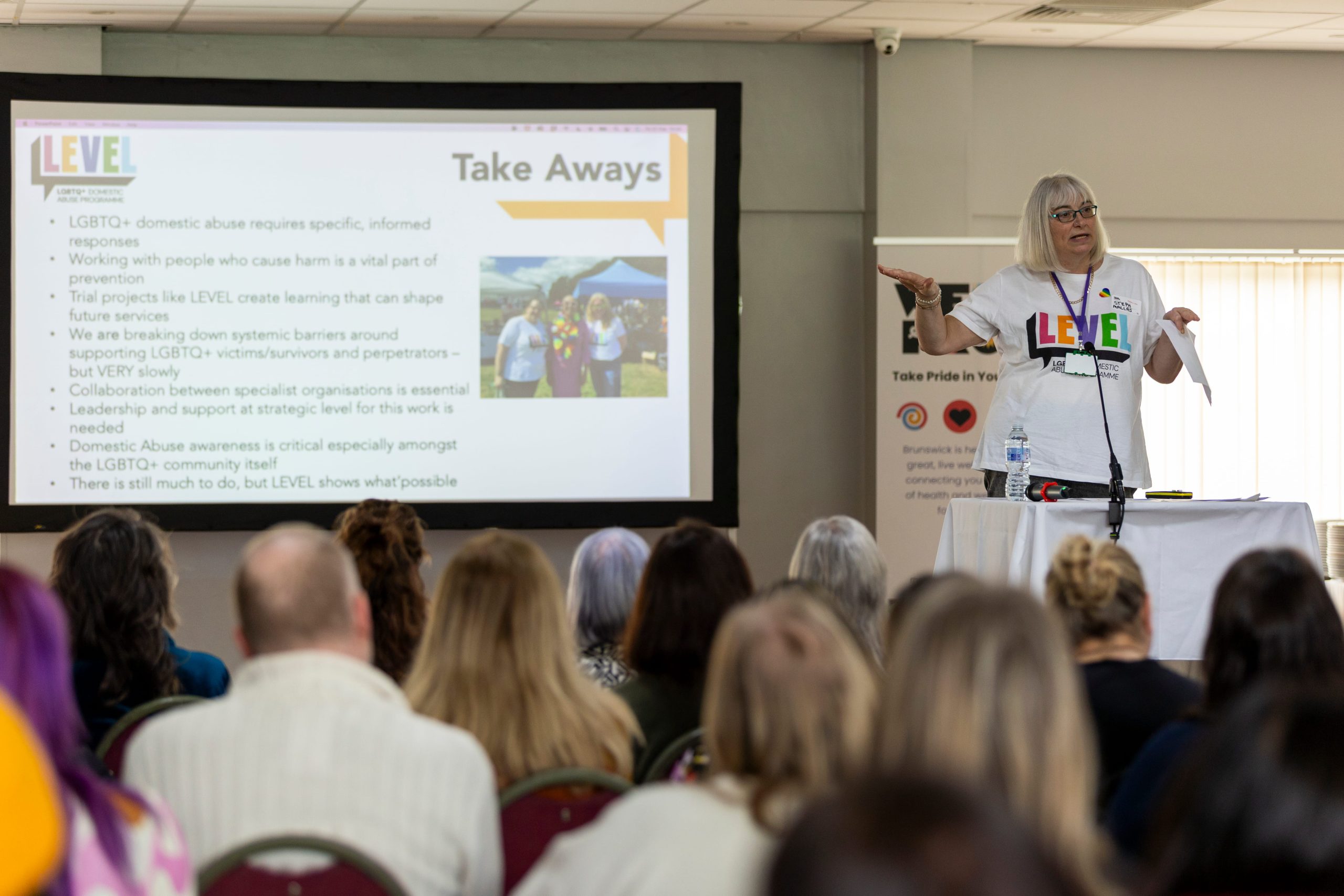
Steph spoke about the need for responses to domestic abuse that recognise the specific experiences of LGBTQ+ communities. While awareness of abuse in same sex and LGBTQ+ relationships has grown in recent years, many people still face barriers when trying to access support.
The LEVEL programme focuses on working with those who cause harm in relationships, alongside ensuring support is available for those affected. By encouraging reflection, accountability and behaviour change, the programme aims to help build safer and healthier relationships.
Steph highlighted the importance of specialist services that understand LGBTQ+ identities and experiences. Creating spaces where people feel understood and supported is key to encouraging people to seek help and engage with services.
The discussion reflected a wider theme across the conference. Improving wellbeing requires services that are inclusive, responsive and rooted in partnership working.
Alongside the LEVEL session, a number of other speakers shared work taking place across Calderdale and Kirklees.
Anne Glew and Jess Tintor from Brunswick explored ongoing HIV stigma and the importance of education and visibility through their session Prevention, Care and Connection. Jan Spence from Yorkshire Smokefree Calderdale introduced Queer as Smoke, an LGBTQ+ stop smoking initiative designed to provide accessible and inclusive support.
John Fox from The Hep C Trust discussed partnership work through Mission Zero, which aims to end new transmissions of HIV, TB and viral hepatitis by 2030 through collaboration, prevention and testing.
Health awareness was also explored through Caroline Moralle’s Queer Bits session, which focused on inclusive communication around cervical, breast, pec and chest screening.
Panel discussions brought together partners and community leaders. Speakers from Happy Valley Pride, Calderdale Pride and Holmfirth Pride reflected on the role Pride events play in creating visible and welcoming spaces for LGBTQ+ communities. The DRAG panel explored substance use and alcohol within LGBTQ+ communities, highlighting the importance of harm reduction and lived experience in shaping services.
The conference closed with a powerful contribution from Nathaniel J Hall, whose work as a writer, performer and HIV activist continues to challenge stigma and encourage open conversations around all aspects of LGBTQ+ wellbeing including toxic relationships.
Together, the sessions demonstrated the strength of partnership working across the region. From relationship support to HIV prevention, stop smoking initiatives to community Pride events, the Well Proud Conference highlighted the range of work taking place to support LGBTQ+ wellbeing.